The Best Cat Litter (2026)
We compared six popular cat litters — clumping clay, natural, and crystal — on odor control, dust, clumping strength, and box compatibility to help you find the right fit for your home.
PawListed is reader-supported. When you buy through links on our site, we may earn an affiliate commission at no extra cost to you. We only recommend products we'd use for our own pets. See our affiliate disclosure.

Litter is the one supply you'll buy every month for the rest of your cat's life, and the "best" bag depends on what you're optimizing for — clumping strength, dust, scent, or compatibility with an automatic box. We compared six widely available cat litters using manufacturer specifications and product listings: material and type (clumping clay, natural, or crystal), odor-control technology, dust level, clumping performance, and litter-box compatibility. We haven't tested these products hands-on, and none of the picks below reflect a veterinarian's endorsement or an aggregation of owner reviews — treat this as a spec-based starting point for narrowing the field, then read the individual listings before you buy. See our testing standards for how we approach every roundup.
| Product | Rating | Best for | Check price |
|---|---|---|---|
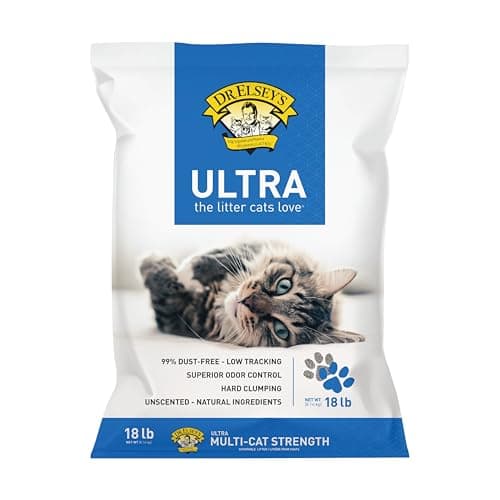 | ★ 4.3 (29,800) | Best overall | Check price on Amazon |
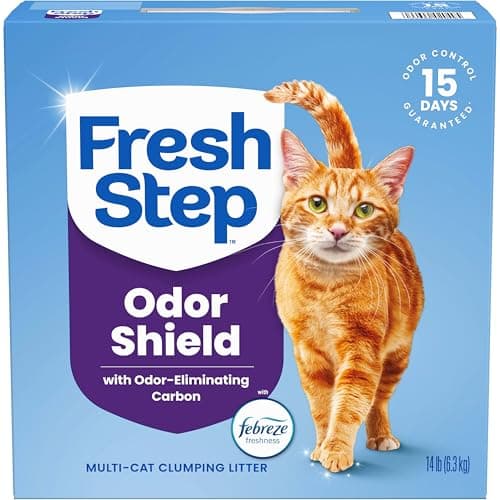 | ★ 4.6 (95,689) | Best for odor | Check price on Amazon |
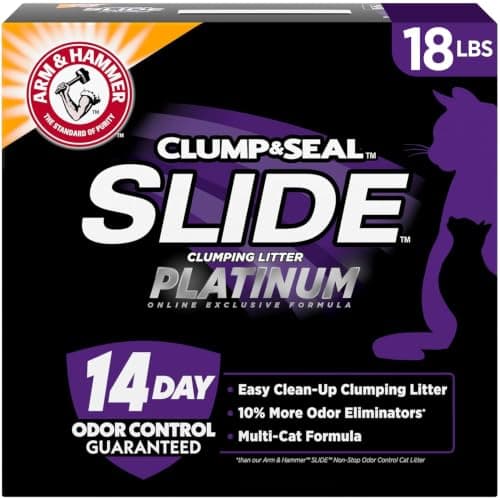 | ★ 4.6 (19,248) | Best for easy scooping | Check price on Amazon |
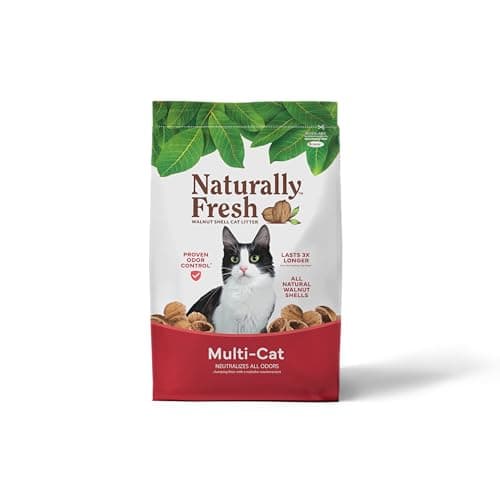 | ★ 4.6 (303) | Best natural | Check price on Amazon |
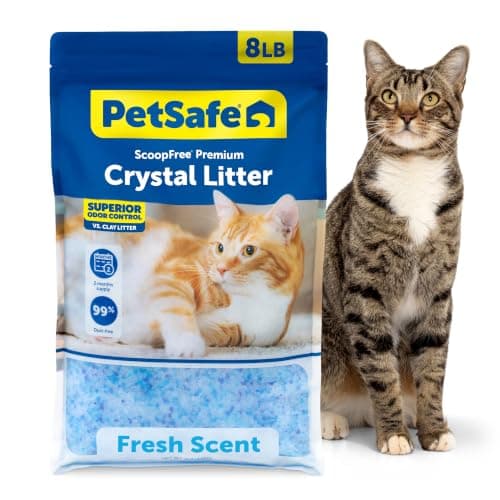 | ★ 4.5 (1,672) | Best for automatic boxes | Check price on Amazon |
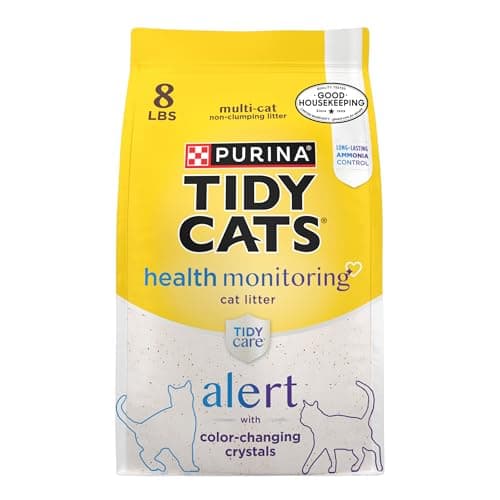 | ★ 4.4 (2,869) | Best for health monitoring | Check price on Amazon |
Best overall
Dr. Elsey's Ultra Unscented Clumping Clay Cat Litter, 18 lb Bag
★ 4.3 (29,800 reviews)
A hard-clumping, low-dust, unscented clay — the reliable default most cats accept without fuss.
Check price on AmazonBest for odor
Fresh Step Odor Shield Multi-Cat Clumping Cat Litter with Febreze Freshness, Low Dust, 14 lb
★ 4.6 (95,689 reviews)
Ammonia-block and ClumpLock odor tech aimed at multi-cat homes where the box works overtime.
Check price on AmazonBest for easy scooping
ARM & HAMMER Slide Platinum Easy Clean-Up Clumping Cat Litter, 18 lbs
★ 4.6 (19,248 reviews)
A non-stick formula that slides clumps off the box bottom — less scraping, and it's fine in robotic litter boxes.
Check price on AmazonBest natural
Naturally Fresh Cat Litter Made from Walnut Shells, Unscented, Multi-Cat, Low Dust, 30 lbs
★ 4.6 (303 reviews)
Made from upcycled walnut shells — a plant-based, low-dust, sustainable pick that still clumps.
Check price on AmazonBest for automatic boxes
PetSafe ScoopFree Odor Control Crystal Cat Litter, Fresh Scent, 8 lb Bag
★ 4.5 (1,672 reviews)
Silica crystals that dry waste fast for strong odor control — designed for ScoopFree-style automatic litter boxes.
Check price on AmazonBest for health monitoring
Purina Tidy Cats Tidy Care Alert Health-Monitoring Non-Clumping Cat Litter with Silica Crystals, 8 lb
★ 4.4 (2,869 reviews)
Non-clumping silica crystals that change color to flag possible urinary issues — a useful early-warning for first-time owners.
Check price on AmazonHow to choose cat litter
Clumping clay, natural, or crystal? Clumping clay (bentonite) is the category default for a reason — it forms hard, scoopable clumps that hold together in the box, so waste comes out cleanly and dry litter stays dry. Natural litters (walnut shell, corn, wheat, pine) are plant-based and biodegradable, and the better ones still clump, but texture and dust vary more by brand than clay does. Crystal (silica gel) litter doesn't clump at all — it absorbs moisture and dries waste instead, which is why it shows up most in automatic boxes and health-monitoring products, where clumps would jam a mechanism or hide a color-change signal.
Scented vs. unscented. Scented litter is a fragrance marketed at the owner, not the cat — and cats' noses are far more sensitive than ours. A cat who dislikes a perfumed litter may simply avoid the box, which is a bigger problem than any odor the scent was meant to cover. Unscented, odor-neutralizing formulas (activated carbon, baking soda, ammonia-blocking additives) tend to be the safer default, especially when you're introducing litter to a cat for the first time.
Dust. Low-dust matters for two reasons: it's easier on a cat's respiratory system (and yours), and it means less tracking and less airborne cloud when you pour a fresh bag or scoop. If anyone in the house has asthma or allergies, or your cat is a vigorous digger, prioritize a litter that's explicitly labeled low-dust.
Multi-cat households. More cats means more waste hitting the box between cleanings, so multi-cat formulas lean harder on odor control and clump strength to keep the box usable for a full day rather than a few hours. As a rule of thumb, keep one box per cat plus one extra regardless of which litter you choose — no litter fully compensates for too few boxes.
Switching litter with a new cat. Cats are creatures of habit about their box, and an abrupt litter change is a common cause of a cat avoiding it altogether. Start with whatever litter the shelter or foster was using, and if you want to switch, mix the new litter in gradually over a week or two rather than swapping it all at once.
How much litter, and how deep
Two to three inches of clumping litter is the sweet spot. That's enough depth for a cat to dig and cover, and enough for clumps to form fully without welding themselves to the bottom of the box. Going deeper doesn't improve odor control — it just means you buy litter more often and carry more weight up the stairs.
Crystal litter works differently and usually wants a shallower layer; follow the depth on the bag, because these products are formulated around a specific volume absorbing a specific amount of moisture.
Whichever you use, top the box back up after scooping. Every clump you remove takes litter with it, and a box that's drifted down to an inch deep is the most common reason a previously reliable cat starts missing.
A scooping and cleaning schedule that actually works
Scoop at least once a day, twice if you have more than one cat. This does more for odor than any formula on the shelf — no litter is designed to sit on waste for three days and still smell like nothing.
For clumping litter, dump the whole box and wash it every two to four weeks depending on how many cats use it. Crystal litter typically wants stirring daily so fresh surface is exposed, then full replacement on roughly the schedule the bag specifies.
One cleaning detail worth getting right: wash the box with unscented soap and warm water, not bleach or any ammonia-based cleaner. Ammonia is a component of cat urine, so an ammonia-scented box reads to your cat as somewhere that's already been marked — which encourages exactly the behavior you're trying to prevent.
Switching litters without a box strike
Cats are conservative about their toilet, and an abrupt switch is one of the most common triggers for a cat abandoning the box altogether. Two approaches work:
Mix it in gradually. Start at roughly a quarter new litter to three quarters old, and shift the ratio every few days over one to two weeks. Slower is fine. Faster is how you end up cleaning a rug.
Or offer a choice. Put a second box beside the first with the new litter in it and let your cat vote. This is the more reliable method if you have the space, and it tells you something a gradual mix can't — a clear preference rather than grudging tolerance.
Either way, watch for the early warning signs: digging less than usual, standing on the rim instead of stepping in, scratching at the floor beside the box, or going right next to it. Any of those means back off to the previous ratio and move more slowly.
The box matters as much as the litter
You can buy the best litter on this page and still have problems if the box is wrong.
- Size. Roughly one and a half times your cat's body length, nose to base of tail. Most boxes sold in pet shops are smaller than that, which is why so many cats hang over the edge.
- Number. One per cat, plus one spare. Two cats means three boxes. This is the single most-ignored rule in cat keeping.
- Placement. Somewhere quiet with more than one way out — a cat that feels cornered while using the box starts avoiding it. Keep it away from noisy appliances that can startle mid-use, and away from food and water bowls.
- Covered or open. Covers do a good job of containing odor for you and a poor job for the cat inside, and they make the box feel like a dead end. Plenty of cats accept them; if you're troubleshooting a problem, though, the lid is one of the first things to try removing.
- Liners. Frequently disliked, and they snag claws during digging. Skip them unless yours clearly doesn't mind.
- Entry height. Kittens and arthritic seniors need a low step-in. A high-sided box that a young cat vaults into effortlessly can become genuinely difficult at twelve.
Managing tracking and dust
Tracking is mostly solved with hardware rather than litter choice. A large mat outside the box catches the majority of it, and high-sided or top-entry boxes cut it dramatically for cats who kick.
For dust: pour slowly and hold the bag low to the box rather than tipping it in from a height, which is when most of the airborne cloud happens. If anyone in the house has asthma, prioritize an explicitly low-dust litter over every other feature.
What to avoid
- Scented litter as a default, for the reasons above — it's aimed at you, not your cat.
- Clumping clay for very young kittens. Kittens explore by mouth, and clumping clay is commonly advised against until around three to four months old because ingested bentonite can clump internally. Non-clumping is the usual recommendation for that window.
- Deodorizing powders sprinkled into the box. More fragrance, same underlying problem, and one more reason for a sensitive cat to opt out.
- Ammonia or bleach cleaners, as covered above.
- Fewer boxes than cats. No litter compensates for this.
When a litter problem is a health problem
This is the part worth reading twice, because the litter box is where cats show you illness first.
Straining without producing much, repeated trips to the box in a short period, crying while using it, blood in the litter, or suddenly urinating outside the box are all signs of a possible urinary tract problem. In male cats especially, a urinary blockage is a genuine emergency — it can become life-threatening within a day, and it's the single scenario every cat owner's emergency fund exists for. Don't wait to see if it settles overnight; our guide on when a vet visit can't wait covers how to make that judgement, and the cost of owning a cat puts realistic numbers on what treatment involves.
Changes in stool — persistent diarrhea, or nothing at all for a couple of days — are worth a call too. This is also the argument for the color-changing health-monitoring litter above: not because it diagnoses anything, but because it makes a change hard to miss in a box you might otherwise scoop on autopilot.
For the full day-by-day plan on everything else a new cat needs in the first month — safe rooms, the first vet visit, bonding milestones — see our new cat's first 30 days guide.
Frequently asked questions
What is the best cat litter overall?
An unscented hard-clumping clay is the right default for most homes. It clumps firmly enough to scoop cleanly, controls odour when scooped daily, and has the texture cats accept most readily. Reach for a specialist litter only when you have a specific problem to solve — heavy multi-cat odour, dust sensitivity, or an automatic box.
What kind of cat litter do cats prefer?
Fine-grained, unscented, clumping litter, by a wide margin in preference testing. Cats evaluate litter by how it feels underfoot rather than how it smells, which is why fragranced litters are a common cause of box avoidance. If your cat is rejecting a box, texture is the first thing to change.
How often should I change cat litter?
Scoop at least twice a day. For clumping litter, top up as the level drops and do a full change with a box wash every two to four weeks for one cat, weekly for a multi-cat box. Non-clumping litter needs a complete change every week.
Is clumping or non-clumping litter better?
Clumping, for almost everyone — it lets you remove waste completely instead of leaving urine to soak into the base. Non-clumping still makes sense in two cases: crystal litters designed for specific automatic boxes, and kittens under about four months, who may ingest clumping clay while learning.
How do I switch cat litter without upsetting my cat?
Mix the new litter into the old over 7 to 10 days, starting at roughly a quarter new and increasing every few days. An abrupt full change is the most common trigger for a box strike. If you have space, an easier route is putting a second box with the new litter alongside the existing one and letting your cat choose.
What is the best cat litter for odour control?
A hard-clumping clay with an ammonia-targeting additive handles multi-cat odour best, and crystal litters dry waste quickly and hold odour well. But the honest answer is that litter is the second variable — scooping frequency is the first. No litter on the market outperforms scooping twice a day.
Is dusty cat litter bad for cats?
Heavy dust is worth avoiding for both of you, particularly for cats with asthma and for anyone with respiratory sensitivity. Low-dust clay, tofu, and walnut litters all reduce it. Pouring slowly and close to the box surface cuts airborne dust considerably regardless of which litter you use.