The Best Dog Nail Clippers (2026)
We compared six popular dog nail clippers — plus one grinder — on blade design, safety features, and size fit to help you trim nails safely at home.
PawListed is reader-supported. When you buy through links on our site, we may earn an affiliate commission at no extra cost to you. We only recommend products we'd use for our own pets. See our affiliate disclosure.

Nail trims run $10–$25 at most groomers, but a decent pair of clippers usually pays for itself within a visit or two. The hard part is picking a tool that fits your dog's size and won't leave you guessing where the quick is.
We compared six widely available dog nail clippers — plus one popular grinder — using manufacturer specifications and product listings: blade material and size, safety-stop or guard design, size fit across breeds, and whether a clipper or a grinder suits the job better. We haven't tested these products hands-on, and none of the picks below reflect a veterinarian's endorsement or an aggregation of owner reviews — treat this as a spec-based starting point for narrowing the field, then read the individual listings before you buy. See our testing standards for how we approach every roundup.
| Product | Rating | Best for | Check price |
|---|---|---|---|
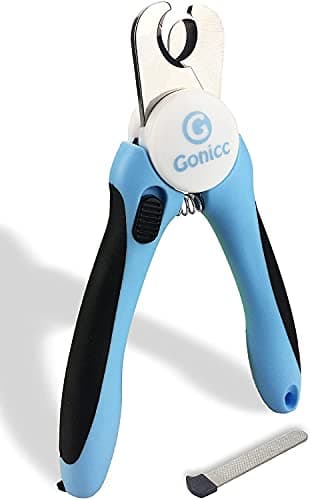 | ★ 4.5 (78,838) | Best overall | Check price on Amazon |
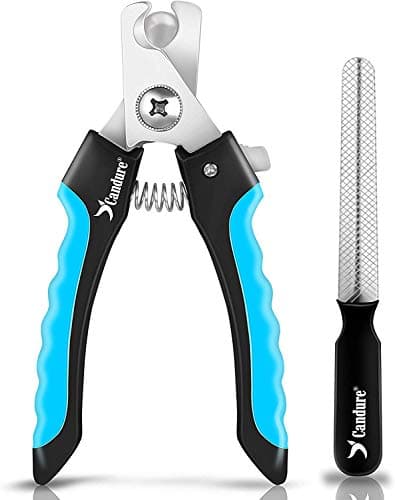 | ★ 4.6 (42,435) | Budget pick | Check price on Amazon |
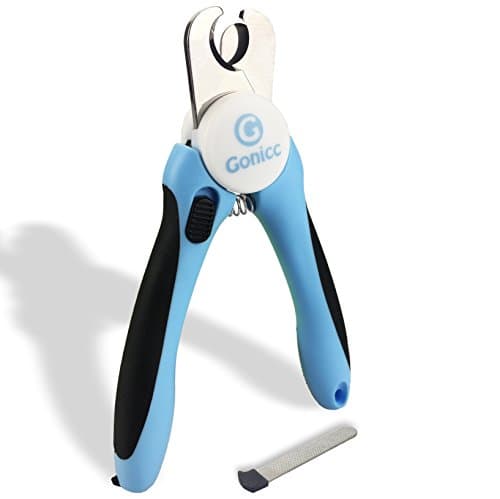 | ★ 4.5 (6,290) | Best for small dogs & cats | Check price on Amazon |
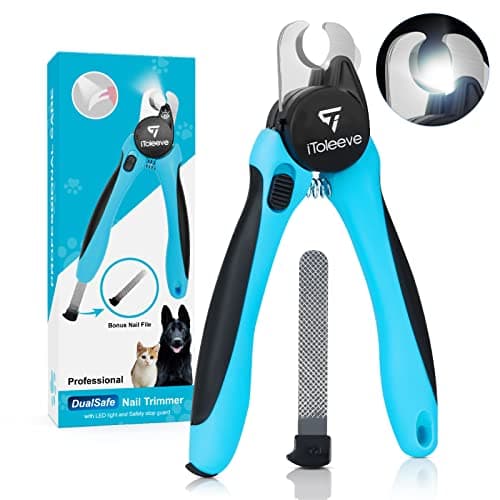 | ★ 4.4 (7,198) | Best for light nails | Check price on Amazon |
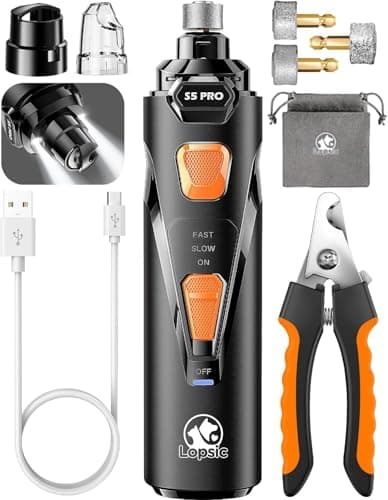 | ★ 4.5 (9,422) | Best grinder alternative | Check price on Amazon |
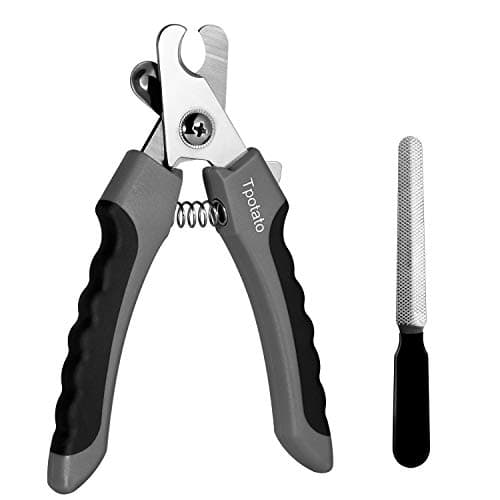 | ★ 4.6 (11,362) | Cheapest | Check price on Amazon |
Best overall
gonicc Professional Dog & Cat Pets Nail Clippers & Trimmers
★ 4.5 (78,838 reviews)
Heavy 3.5mm stainless-steel blades with a safety stop and a built-in file — built for clean, one-snip cuts on medium and large dogs.
Check price on AmazonBudget pick
Candure Dog Nail Clippers and Trimmer with Safety Guard to Avoid Over-Cutting Toe Nails, Professional Grooming Pet Nail Clipper with Nail File for Small, Medium & Large Breeds
★ 4.6 (42,435 reviews)
Straightforward clippers with a safety guard and a built-in file — a dependable pick for routine at-home trims across breed sizes.
Check price on AmazonBest for small dogs & cats
gonicc Professional Pet Nail Clippers & Trimmer for Medium & Small Dogs and Cats
★ 4.5 (6,290 reviews)
gonicc's right-sized version for small dogs and cats — the same safety stop and clean cut in a smaller blade.
Check price on AmazonBest for light nails
iToleeve LED Dog Nail Clipper with Light, Illuminates the Nail for Safe Trimming, Extra Sharp for Thick Nails, Quick Sensor, for Cats & Dogs
★ 4.4 (7,198 reviews)
A built-in LED lights up the nail so you can see the quick before you cut — reassuring on light-colored nails and for nervous first-timers. (The LED works best on light nails.)
Check price on AmazonBest grinder alternative
Whisper Quiet Dog Nail Grinder, Safe & Stress-Free for Sensitive Dogs and Cats
★ 4.5 (9,422 reviews)
Not a clipper but a quiet grinder — the gentler route for thick nails or anxious dogs who dislike the snip, with an LED guide and multiple speeds.
Check price on AmazonCheapest
Tpotato Dog Nail Clippers, Dog Nail Trimmers for Large Breed Dog with Quick Sensor, Safety Guard and Nail File
★ 4.6 (11,362 reviews)
The lowest-priced option here, built around large-breed nails with a quick-sensor guard and a quieter cut.
Check price on AmazonHow to choose
Clipper or grinder? Guillotine and scissor-style clippers make the cut in one fast motion, and that's what most owners default to. A grinder sands the nail down gradually instead — slower, but many owners find it less stressful for nail-shy dogs, and it's much harder to over-cut by accident since you can stop the moment the nail looks close to the quick.
Blade size and material. A clipper sized for a small dog won't get through a large dog's thick nails cleanly — undersized blades tend to crush rather than cut, which hurts more and can splinter the nail. Match the blade material and size to your dog's actual nail thickness, not just their weight class.
A safety stop or guard. Most of the clippers above include an adjustable guard or stop meant to limit how much nail the blade takes off in a single cut. It isn't foolproof, but it meaningfully lowers the odds of cutting too far back — especially useful for a first-timer or a dog that won't hold still.
Finding the quick. The quick is the blood vessel and nerve running through the center of the nail — cut into it and you'll cause pain and bleeding. On light or clear nails you can usually see the quick as a pinkish core; on black nails it's invisible, which is exactly where a grinder or an LED-lit clipper earns its keep. When you're not sure, take off small amounts at a time rather than one big cut, and keep styptic powder within reach just in case.
How to trim your dog's nails at home
Buying the right clippers is the easy half. Most of the anxiety around nail trims comes from technique, and the technique is genuinely simple once someone spells it out.
- Set everything out before you start. Clippers, styptic powder (or cornstarch as a backup), and a handful of treats, all within arm's reach. Getting up mid-trim to hunt for something teaches your dog that this process is unpredictable, which is exactly the association you don't want.
- Pick a position you can both hold. Small dogs are usually easiest in your lap or on a table at your chest height. Large dogs are often easiest lying on their side, or sitting with you beside them rather than looming over them. If you're fighting to keep them still, the position is wrong — change it before you change anything else.
- Isolate one toe. Press gently on the pad to extend the nail, and push back any fur so you can see what you're cutting. Hold the paw in a natural position rather than bending the joint backwards.
- Cut front to back, not top to bottom. Angle the blade roughly 45 degrees so you're taking the tip off in line with how the nail grows. Cutting straight down across the nail is what causes splitting.
- Take thin slices. Two or three small cuts get you to the same place as one confident cut, with a fraction of the risk. This matters most on dark nails, where you're working blind.
- Don't forget the dewclaws. They sit higher on the inside of the leg and never touch the ground, so they wear down less and overgrow more. They're the nails most likely to curl into the pad.
- Stop while it's still going well. Four nails today and four tomorrow beats one bad session that makes the next ten harder.
If you cut into the quick
It happens to nearly everyone eventually, including professionals. It is painful and it bleeds convincingly, but it is not usually dangerous.
Stay calm — your dog reads your reaction more than the injury. Pinch a generous amount of styptic powder onto the nail tip and hold light, steady pressure for a couple of minutes; cornstarch or plain flour works if you have nothing else. Then keep them quiet and off carpet for fifteen or twenty minutes, because walking around reopens it.
Call your vet if the bleeding hasn't stopped after about twenty minutes of pressure, or if the nail looks split down into the bed rather than simply cut short. Watch the toe over the next few days for swelling, heat, or limping — signs of infection are the real risk here, not the initial bleed. Our guide on when a vet visit can't wait covers how to judge that kind of call more generally.
How often should you trim?
The reliable test is sound: if you can hear nails clicking on a hard floor, they're already longer than they should be. For most dogs that means a trim every three to four weeks, but the real interval depends on wear. A dog walked daily on pavement files their own nails down and may need very little help. A dog exercised mainly on grass, or an older dog doing shorter walks, will need trimming noticeably more often.
This is worth staying on top of rather than treating as cosmetic. Nails long enough to hit the ground push the toes out of alignment every step, which changes how a dog distributes weight and adds strain to the joints above. Left far enough, a nail can curl round into the pad.
With a puppy, trim far more often than the nail actually needs it. The point at that age isn't the nail — it's building a dog who finds having their paws handled completely unremarkable.
If your dog hates having their paws touched
Don't try to solve this in one session; you'll lose. Build it over a week or two in steps small enough that your dog stays relaxed at every stage:
- Touch a paw, treat, let go. Repeat until it's boring.
- Hold the paw for a second or two, treat, release.
- Bring the clippers out and let them sniff, treat, put them away without cutting anything.
- Touch the clippers to a nail without cutting, treat.
- Cut one nail, treat generously, and stop for the day.
The rule that matters most: end every session before your dog gets worried, not after. If you push to the point of struggling, you've taught them the thing you were trying to untrain. Some dogs — particularly those with a bad history — won't get there with patience alone, and there's nothing wrong with handing it to a groomer or vet who can do it quickly and safely.
Keeping the tool working
Nail clippers are cheap enough that people rarely think about maintenance, but a dull blade is the main reason a trim hurts. Blunt edges crush and pinch the nail instead of slicing it, which is both painful and more likely to splinter.
Wipe the blades dry after each use — nail dust holds moisture against the steel. If the clippers start to feel like they're squeezing rather than cutting, or you're finding yourself pressing much harder than you used to, replace them rather than persevering. For grinders, the grinding band or stone wears out and needs swapping, and long coat hair near a spinning head is a genuine hazard: keep fur pulled back and away from the drum.
When to hand it to a professional
At-home trimming isn't the right answer for every dog. Consider a groomer or vet if your dog's nails are thick and completely black with no visible quick, if they have a bite history or panic at restraint, if they're a senior with arthritis who can't hold the positions comfortably, or if the nails are so overgrown that the quick has grown out with them. That last case needs staged trimming over several weeks — sometimes under sedation — to walk the quick back gradually, and it's not a DIY job.
For the full picture on what professional grooming costs — and where at-home nail care fits into your grooming budget — see our dog grooming cost guide.
Frequently asked questions
What are the best dog nail clippers?
For most owners, a stainless-steel scissor-style clipper with a safety stop, sized to the dog. Small dogs and cats need a smaller blade for control; large breeds need enough leverage to cut a thick nail cleanly rather than crushing it. A grinder is the better choice for very thick nails or a dog who dislikes the snap of a clipper.
Are guillotine or scissor dog nail clippers better?
Scissor clippers are easier for most people and handle thick nails better. Guillotine clippers give a very clean cut on small and medium nails, but require you to position the nail correctly through the hole and have blades that dull faster. If you are unsure which you are, choose scissor style.
How do I cut black dog nails without hitting the quick?
Take several thin slices rather than one cut, and look at the cut face after each. You will see a chalky white ring first, then a small dark dot appears in the centre — that dot is the leading edge of the quick, and it is the point to stop. A clipper or grinder with an LED helps, though it works best on lighter nails.
What do I do if I cut the quick and the nail bleeds?
Stay calm and apply styptic powder with firm pressure for 30 seconds. Cornflour or plain flour works if you have no styptic powder. Bleeding usually stops within a couple of minutes. Keep your dog quiet for half an hour so the clot is not knocked off, and call your vet if bleeding continues past 10 to 15 minutes.
How often should you cut a dog's nails?
Every three to four weeks for most dogs. The practical test is sound: if you can hear the nails clicking on a hard floor, or you can see them touching the ground when your dog is standing still, they are overdue. Dogs walked regularly on pavement need trimming less often.
Is a nail grinder better than clippers for dogs?
Grinders are safer against over-cutting because they remove nail gradually, and they leave a smoother edge that will not catch on furniture. The trade-offs are that they take longer, they vibrate and hum, and they generate a smell some dogs dislike. For a dog already nervous about nails, the gentler pace usually wins.
How do I get my dog comfortable with nail trims?
Separate handling from cutting. Spend a week just touching paws and rewarding, then holding the clipper near the paw and rewarding, before you cut anything. When you do start, trim one nail and stop. A dog who has been forced through a bad trim remembers it, and rebuilding from that takes far longer than doing it slowly the first time.