A private in-home dog training session in Salt Lake City costs roughly four to six times what a group class costs per hour. For most well-adjusted puppies and adult dogs without specific issues, that premium isn't worth it — a $200 group class delivers most of what they need.
But for the right cases, in-home training is the only option that works. Group classes can't fix what happens in your kitchen, your hallway, or on your specific block at 7 AM. This guide covers when in-home dog training in Salt Lake City makes sense, what to expect, and how to choose a trainer.
When In-Home Training Is Clearly the Right Choice
Reactivity on Walks
If your dog lunges, barks, or fixates on other dogs, bikes, scooters, or pedestrians during walks, group classes are usually a setback. The class environment overwhelms the dog before any learning can happen.
In-home reactivity work happens in the actual context where the problem occurs — your specific street, your specific neighborhood, your specific triggers. SLC neighborhoods like 9th & 9th, Sugar House, the Avenues, and downtown have real density and dog-on-leash traffic; a trainer who comes to your block can read the actual environment and build a plan around it.
Separation Anxiety
True separation anxiety — panic, destructive behavior, prolonged howling, self-injury when the owner leaves — has to be treated in the home. The trainer needs cameras on the dog, a graduated-departure protocol, and direct observation of the home environment. Group classes are useless for this.
A growing number of Salt Lake City trainers specialize in separation anxiety using protocols from CSAT (Certified Separation Anxiety Trainer) coursework. Expect a multi-week program of remote daily check-ins plus video review, often $1,500–$3,500 total.
Resource Guarding
Guarding food bowls, toys, beds, or specific people is a context-specific behavior. The trainer needs to see your specific layout, your specific feeding routine, and the specific moments where guarding escalates. In-home is the only way to do this well.
Multi-Dog Households
Inter-dog dynamics, food-bowl tension, doorway conflicts, and toy disputes are layout-dependent. A trainer who only sees the dog in a class environment can't see how a hallway choke-point or a bedroom doorway is making the problem worse. In-home is the right call.
Rescue and Adoption Adjustments
Adopting an adult dog in Salt Lake City — especially a transport dog, a rural rescue, or a dog with an unknown history — almost always benefits from 1–2 in-home consultations in the first month. The trainer helps you set up routines, manage the home for success, and identify behavior issues before they ossify.
Door-Rushing, Counter-Surfing, Jumping on Guests
Anything tied to a specific feature of your home — your front door, your kitchen counter, the way guests enter — needs to be trained where it happens. The dog has built specific environmental associations; you can't transfer the work from a training-facility floor to your specific setup.
Senior Dogs
Older dogs often don't tolerate the energy and noise of group classes. In-home work in their familiar environment is gentler on them, lets you address arthritis-related fear (stairs, slick floors, getting in the car), and can be paced to their stamina.
When Group Classes Beat In-Home
For comparison, group classes are the better choice when:
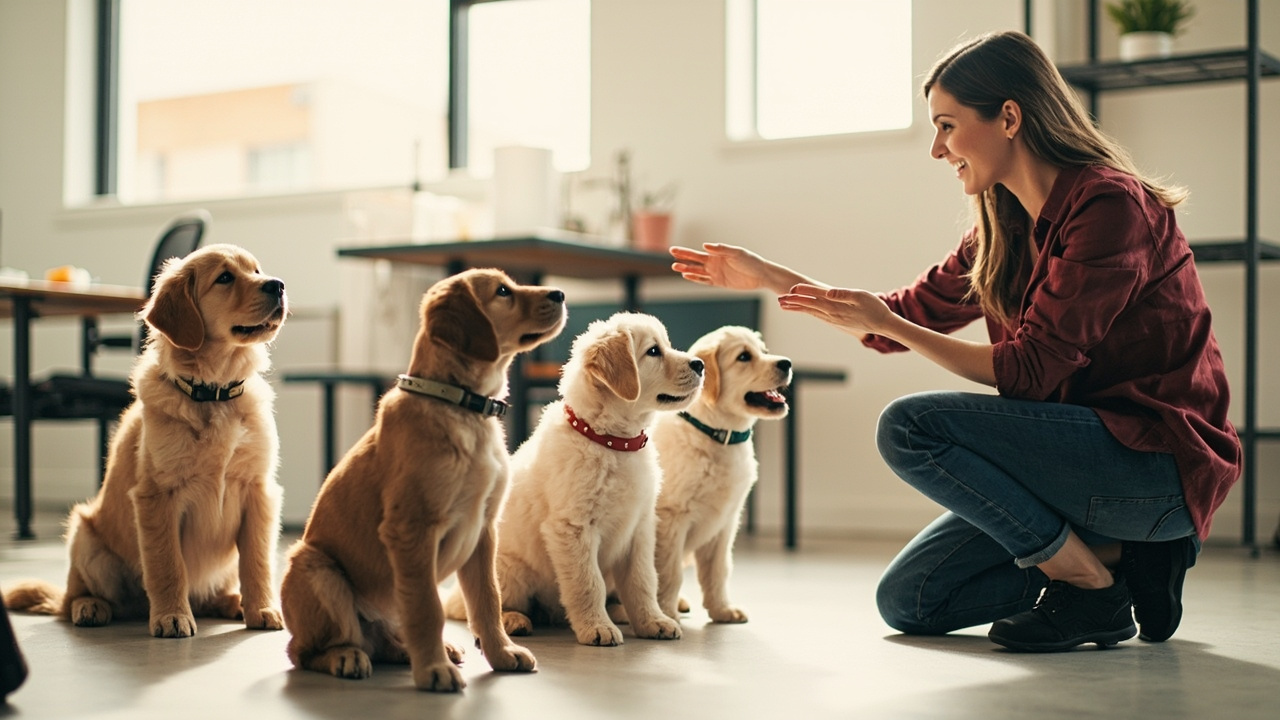
- You have a young puppy in the 8–16 week socialization window — group classes provide socialization that no in-home trainer can replicate
- Your dog needs distraction-proofing — being able to focus around other dogs, handlers, and noise is the entire point
- You're working toward AKC Canine Good Citizen or a sport like rally or agility
- You want the community of training alongside other dog owners
- Your budget is genuinely tight — group classes deliver the most foundational training per dollar
Many Salt Lake City trainers will recommend a hybrid: 1–2 in-home consultations to assess your dog and home, then graduate into a group class once foundations are in place.
What an In-Home Session Looks Like
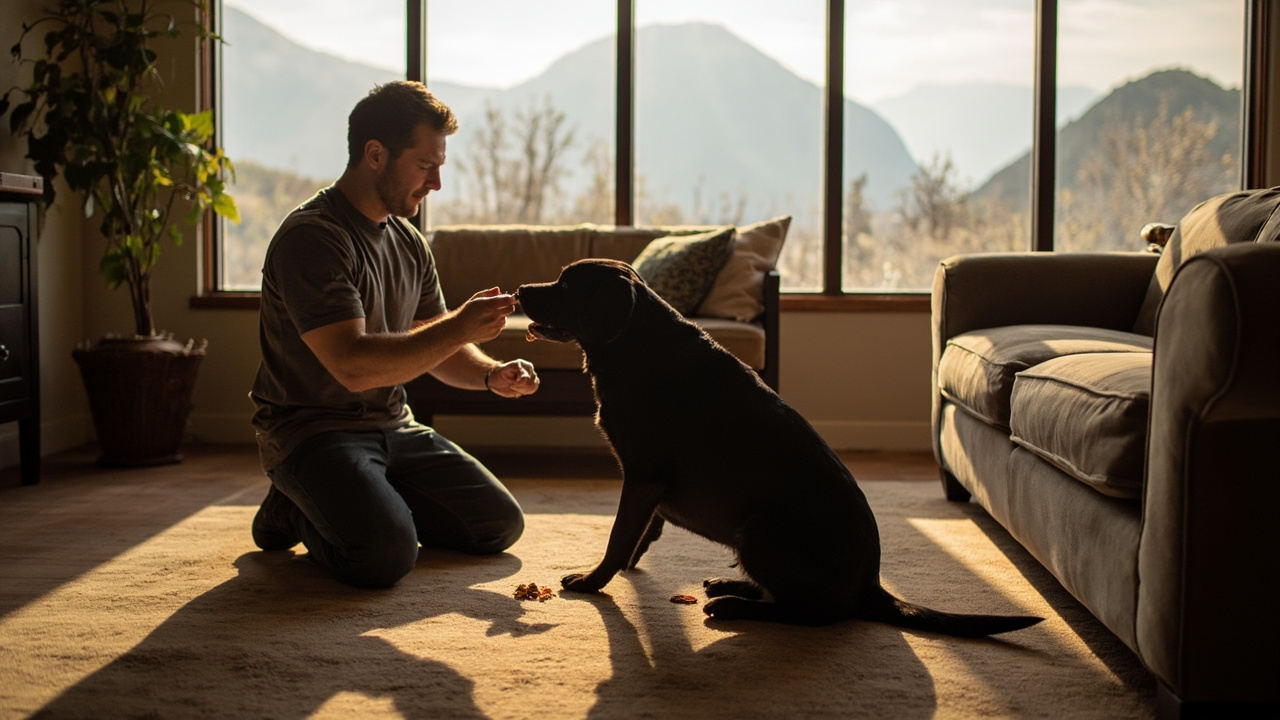
A first in-home consultation in Salt Lake City typically runs 75–90 minutes and includes:
- Verbal intake — history, current behavior, household members, your goals (15 min)
- Observation — the trainer asks to see the problem behavior in its natural setting where safe (15–20 min)
- Initial protocol — the trainer demonstrates 1–3 specific exercises, has you practice while they coach (30 min)
- Written follow-up plan — homework, what to practice, what to avoid (10 min)
- Q&A and scheduling — next session, between-session contact policy, emergency situations
Subsequent sessions are usually 60 minutes and focus on layered practice — adding distance, distractions, duration, and difficulty.
Reputable trainers offer between-session text or email support. Some include short video reviews — you film a 30-second clip of your homework and they reply with feedback. This is one of the fastest ways to make progress.
In-Home Training Pricing in Salt Lake City (2026)
| Format |
Typical Price |
Notes |
| Single in-home session |
$90–$160 |
60–90 minutes |
| Initial consultation |
$120–$200 |
75–90 minutes, often longer than follow-ups |
| 4-session package |
$400–$650 |
~10–15% discount vs. single sessions |
| 6-session package |
$600–$950 |
Most common reactivity package |
| Separation anxiety program |
$1,500–$3,500 |
6–12 weeks, mostly remote |
| Phone/video consult |
$50–$120 |
30–45 min, often the first contact |
| Behavior consult (CDBC, DACVB) |
$250–$500 |
For diagnosable behavior disorders |
Travel Fees
Trainers operating across the Salt Lake Valley sometimes charge a small travel fee outside their core service zone. Common service-zone splits in SLC:
- Central SLC — downtown, Avenues, 9th & 9th, Sugar House, Capitol Hill
- East bench — Holladay, Cottonwood Heights, Millcreek
- South valley — Murray, Sandy, Draper, Riverton
- West valley — West Valley City, Taylorsville, West Jordan
If you're outside a trainer's primary zone, expect a $15–$40 add-on per session. Trainers near the I-15 / I-215 corridors usually have the widest coverage.
What to Look For in an In-Home Trainer
The same credential filter that applies to group-class trainers applies double for in-home work. Look for:
- CPDT-KA, KPA-CTP, or higher (CDBC for behavior cases, DACVB for diagnosable disorders)
- Force-free, reward-based methodology — no shock collars, no prong collars, no leash pops as a default tool
- Specific experience with your issue — ask for case examples
- Written follow-up plans after each session
- Clear cancellation, between-session, and emergency contact policies
A red flag: a trainer who promises a fixed timeline or guaranteed result. Behavior change is real but timelines vary by dog, owner consistency, and environment. Reputable Salt Lake City trainers will give you a range and a list of progress markers, not a guarantee.
How to Get the Most From Your Sessions
In-home training only works if you do the homework. Trainers see your dog 60–90 minutes per week; you live with the dog 167.5 hours per week. The plan only works if you run it.
Specifically:
- Practice every day, even if it's only 5 minutes per session, two or three sessions per day
- Keep a brief log — what triggers you saw, how the dog responded, what you tried
- Film 30-second clips of practice and send to your trainer between sessions
- Don't add new variables until your trainer confirms you're ready — distance, duration, distraction added one at a time
- Loop family members in so the dog gets consistent feedback regardless of who's home
Bottom Line
In-home dog training in Salt Lake City is worth the premium when the problem is context-dependent — reactivity on your specific street, separation anxiety in your specific home, multi-dog dynamics in your specific layout. For young puppies and well-adjusted adults working on foundations, group classes will get you most of the way at a fraction of the cost.
Browse in-home dog trainers serving Salt Lake City to compare service zones, specialties, and reviews.