Dog Separation Anxiety: Signs, Training, and Where to Get Help in Salt Lake City
Separation anxiety is panic, not disobedience — and it spikes every fall when Salt Lake City households go back to school and office routines. Here's how to tell it apart from boredom, what actually fixes it, when medication helps, and which local specialists to call.
Every August, the same thing happens in thousands of Salt Lake City households: summer ends, kids go back to school, hybrid workers drift back to the office — and the dog who spent ten weeks with constant company is suddenly alone for the first time in months. For some dogs it's an adjustment. For others it's full-blown panic: howling that draws neighbor complaints, destroyed door frames, accidents from a fully house-trained adult.
That second group isn't being stubborn or spiteful. Separation anxiety is a panic response — closer to a phobia than a behavior problem — and it's one of the most misunderstood (and most treatable) conditions in dogs. This guide covers how to tell it apart from ordinary boredom, the training approach that actually works, the honest facts about medication, and where Salt Lake City owners can get qualified help. With school starting back up in late August, the best time to start is now.
Is It Separation Anxiety or Just Boredom? Do the Camera Test
Plenty of "separation anxiety" is actually an under-exercised adolescent dog entertaining itself. The distinction matters because the fixes are opposites — enrichment solves boredom; it does not touch panic.
Set up a camera (a laptop on a shelf works fine), leave for 30 minutes, and watch the recording. The two conditions look completely different:
| Sign | Boredom | Separation anxiety |
|---|---|---|
| When it starts | After a while, once idle | Within minutes of the door closing — often before you leave |
| What gets destroyed | Whatever's fun (couch cushions, trash) | Exit points: door frames, window sills, blinds, crates |
| Vocalizing | Occasional, varied | Persistent howling, whining, or barking, often for hours |
| Body language | Loose, playful, naps between mischief | Pacing, panting, drooling, trembling, never settles |
| Eating | Happily takes the treat toy | Won't touch food until you return |
| Accidents | Rare if house-trained | House soiling only when alone, even in short absences |
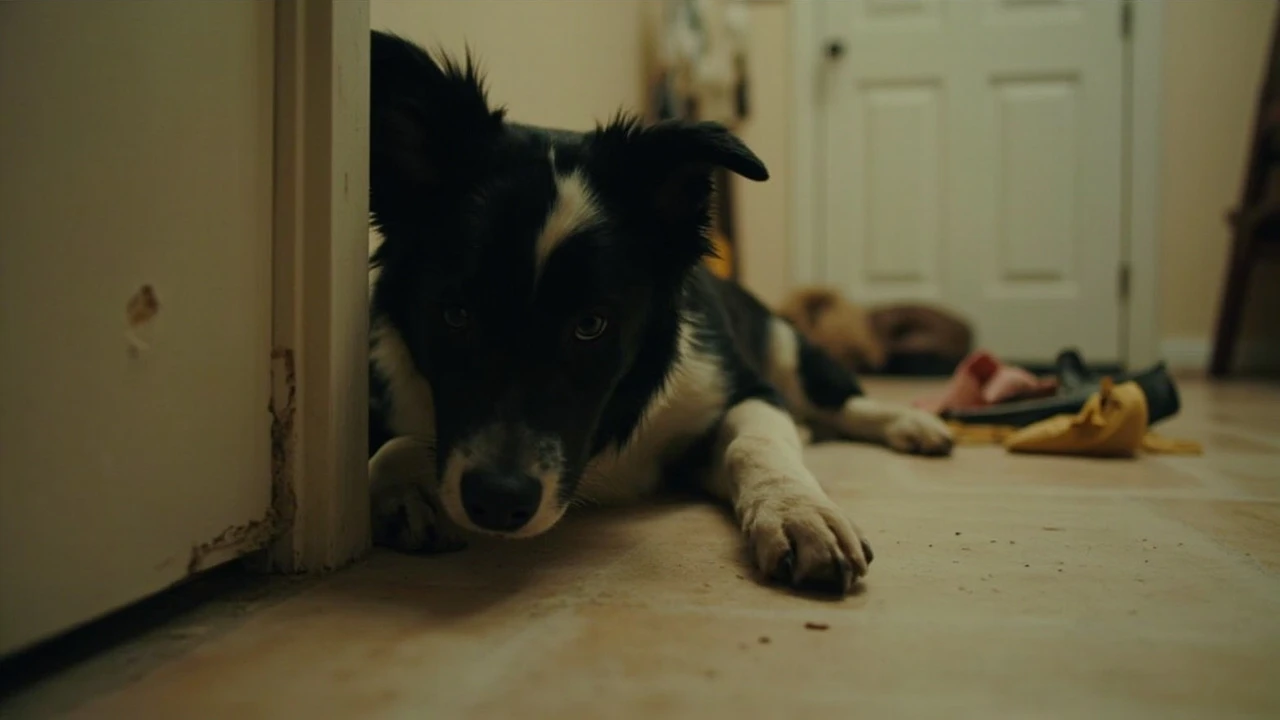
Also watch yourself getting ready: dogs with separation anxiety often start pacing, drooling, or shadowing you at the first pre-departure cue — keys, shoes, a work bag.
Rule out the look-alikes first. House soiling can be a urinary tract infection or incomplete house training; destruction can be adolescence; and panic during summer thunderstorms or fireworks is noise phobia, which overlaps but is treated differently. A vet visit is the right first stop — both to rule out medical causes and because your vet is part of the treatment team if medication ever enters the picture.
What Actually Works: Desensitization Below the Panic Line
The evidence-based treatment for separation anxiety is gradual desensitization: teaching your dog, in tiny increments, that alone time is safe — always staying below the threshold where panic starts. If your dog panics at 40 seconds, you practice 20-second absences and build from there: out the door, count, back in, boring and calm. Over weeks, seconds become minutes become hours.
Three rules make or break it:
- Suspend real absences during training. This is the hard part nobody likes hearing: every full-blown panic episode undoes progress. During active treatment, the dog shouldn't be left alone beyond what they can handle — which is where dog daycare, a pet sitter, a neighbor, or taking the dog along come in. It's temporary, and it's the single biggest predictor of success.
- Never punish the aftermath. The chewed trim and the accident happened during panic, hours before you got home. Punishment doesn't connect — it just adds fear to a fearful dog, and every major veterinary behavior body warns it makes anxiety worse.
- Skip the gadget shortcuts. Bark collars suppress the symptom and worsen the panic. And for many of these dogs, crating intensifies the problem — dogs with confinement distress can injure themselves trying to escape. If the camera shows your dog fighting the crate, drop the crate.
Counter-intuitively, separation anxiety training is one of the few specialties that works brilliantly over video — the whole protocol is camera-based, since the dog has to actually be alone. That means SLC owners aren't limited to local trainers, though several excellent ones are here (below).
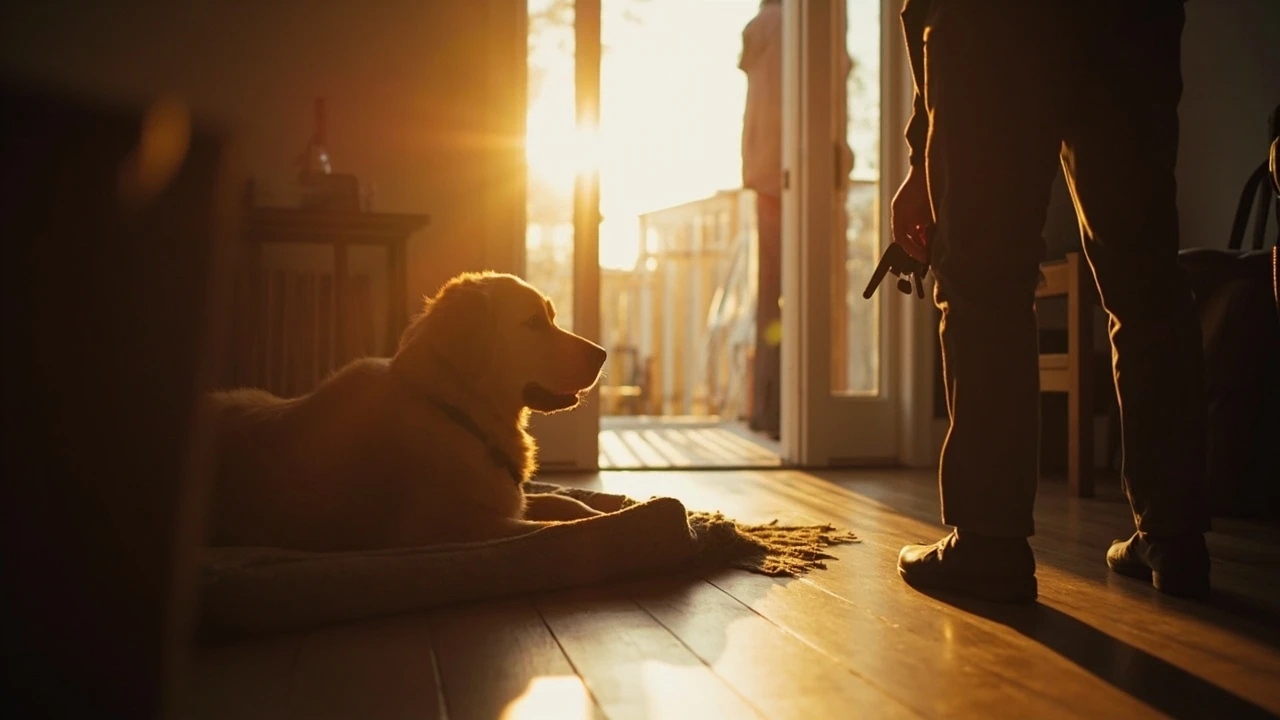
For a deeper look at how modern desensitization protocols work — from the trainer who literally wrote the book on this and created the CSAT certification — this conversation is excellent:
The Honest Facts About Medication
For moderate-to-severe cases, medication isn't a failure or a shortcut — it's scaffolding that lowers the panic enough for training to work. Two things every owner should know:
- Two medications are FDA-approved for canine separation anxiety: fluoxetine (brand name Reconcile) and clomipramine (Clomicalm — approved by the FDA specifically for separation anxiety in dogs). Both are approved for use alongside behavior modification, not instead of it. Head-to-head studies show them similarly effective; which suits your dog is a veterinary call.
- They take 4–8 weeks to reach full effect, so starting in early August doesn't help on the first school morning — another reason to talk to your vet early rather than mid-crisis. Some vets add faster-acting situational medication for the transition window.
Never medicate with leftover human prescriptions or over-the-counter sedatives — dosing and safety are entirely different in dogs. This is a conversation for your veterinarian, and if the case is severe, a veterinary behaviorist.
Getting Help in Salt Lake City
Separation anxiety is a specialist's problem — a general obedience class won't fix panic. What to look for, in escalating order:
- A credentialed behavior specialist. Look for CSAT (Certified Separation Anxiety Trainer — the dedicated certification), CBCC-KA, or CDBC credentials, all force-free. Several Salt Lake City trainers list separation anxiety as a core specialty — browse verified trainers in the directory and check the credentials section on their profiles. Our guide to choosing a trainer explains what each credential means.
- Remote CSAT programs. Malena DeMartini's directory lists certified separation anxiety trainers who work over video nationwide — often the deepest bench for hard cases.
- A veterinary behaviorist for severe cases (self-injury, cases that haven't responded) — they can run medication and training together.
What it costs here: expect an initial private behavior consult around $120–$200, and structured separation-anxiety programs — typically 6–12 weeks, mostly remote and video-review-based — in the $1,500–$3,500 range. That's real money, but it's a fraction of years of damaged housing, neighbor complaints, and daycare-by-necessity. Our in-home training guide covers how to read a quote.
Preventing It: New Puppies, New Rescues, New Routines
- Practice alone time from day one. Puppies and newly adopted dogs should experience brief, boring absences daily — even while you work from home. A dog who has never been alone learns nothing about being alone. (Puppy classes build the confidence side.)
- Shift schedules gradually. If September means an empty house from 8 to 3, start rehearsing in early August: leave for 10 minutes, then 30, then an hour, on the new morning rhythm — breakfast time, walk time, departure time.
- Make departures and arrivals boring. Long dramatic goodbyes and excited reunions teach the dog that absences are a big deal. Calm both ends down.
- Exercise before you leave — a walked, sniffed-out dog settles more easily. (In this heat, that means dawn — see our dog-friendly hiking guide for early-morning options.)
Frequently Asked Questions
How do I know if my dog has separation anxiety or is just bored?
Film a 30-minute absence. Separation anxiety starts within minutes, targets exit points (doors, windows, crates), and shows panic signs — pacing, drooling, howling, refusing food. Boredom looks relaxed, starts later, and targets whatever's entertaining. When in doubt, show the video to your vet or a behavior specialist — it's the single most useful diagnostic they can see.
Can separation anxiety be cured?
Most dogs improve dramatically with proper desensitization, and many recover fully — but it's a weeks-to-months project, not a quick fix. The success predictors are staying below the panic threshold, suspending unsupervised absences during training, and getting qualified help early rather than after months of rehearsed panic.
Will medication alone fix it?
No. Both FDA-approved medications (fluoxetine/Reconcile and clomipramine/Clomicalm) are approved for use with behavior modification. Medication lowers the panic enough for training to work — on its own it usually only dulls the symptoms.
Should I crate my dog to stop the destruction?
Usually no. Many dogs with separation anxiety also have confinement distress, and a crate can escalate panic to the point of broken teeth and injured paws. If a camera shows your dog fighting the crate, use a dog-proofed room or gated area instead — and treat the anxiety itself.
Does doggy daycare help separation anxiety?
Daycare is excellent management — it prevents the rehearsal of panic while you train, which matters enormously. But it doesn't teach the dog to be alone; pair it with a desensitization program rather than using it as the permanent fix.
Will getting a second dog fix it?
Usually not. Most separation anxiety is about being away from people (or being alone in general), and studies and specialist experience consistently show a second dog rarely resolves it — sometimes you just end up with an anxious dog and a new dog who learns from them. Fix the anxiety first.
How much does separation anxiety training cost in Salt Lake City?
Plan for $120–$200 for an initial behavior consult and roughly $1,500–$3,500 for a structured 6–12 week program (largely remote, with video review between sessions). Severe cases involving a veterinary behaviorist and medication run more. Compare that to daycare five days a week indefinitely, and treatment pays for itself.
The Bottom Line
Separation anxiety is panic, it's common, and it's treatable — but not by waiting it out, punishing it, or buying a gadget. Camera test first, vet check second, then a credentialed specialist and a below-threshold training plan — with medication as legitimate scaffolding when the panic is too high to train under. And if your household's schedule flips in late August, start rehearsing the new routine now, not the night before.
Find force-free trainers and behavior specialists across Salt Lake City on PawListed — several list separation anxiety as a specialty, with credentials you can verify right on their profiles.